Published March 16, 2026 by AI User Safety (AIUS)
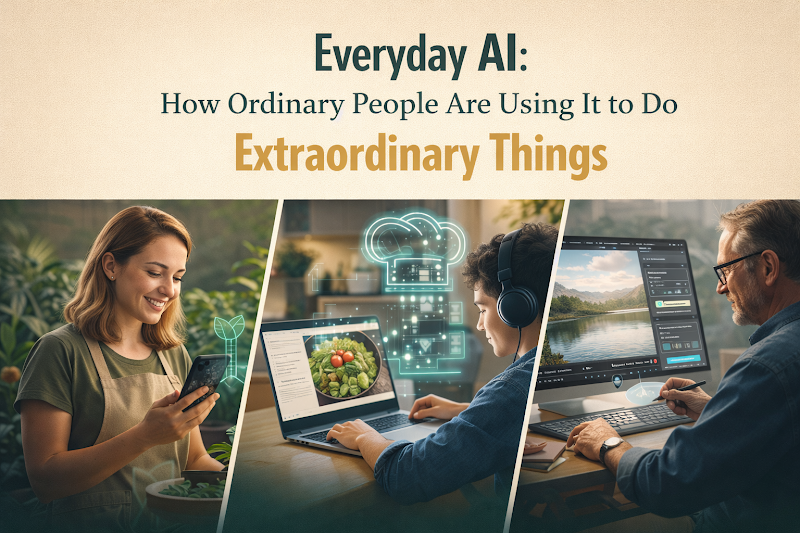
The image many people have of AI users is a highly technical professional building complex systems. That image can make artificial intelligence feel inaccessible. But daily reality looks different.
Teachers planning lessons. Nurses summarizing research. Small business owners drafting marketing copy. Parents preparing for difficult conversations. People who would not call themselves "tech people" are finding practical value through SAFE AI Use habits.
What Everyday SAFE AI Use Looks Like
A secondary school teacher uses AI to generate differentiated lesson variants for students at different reading levels, reducing preparation time and increasing teaching time.
A freelance writer uses AI to organize notes and reveal argument gaps before drafting. AI does not write for him. It helps him think more clearly and structure better.
A small business owner uses AI to draft professional emails, then edits them to sound like herself, improving communication confidence over time.
None of these uses are flashy. They are practical, useful, and grounded in human judgment.
"The best use of AI is not the most impressive one. It is the one that makes your actual life meaningfully better."
The Difference Between Using AI and SAFE AI Use
The people getting lasting value from AI are not defined by technical ability. They are defined by intentionality. They know what they are asking AI to do and why. They verify outputs. They stay in the driver's seat.
This is what the SAFE AI Use Framework is built for: Structure, Accelerate, Filter, Empower. Four principles that make AI useful for real people in real roles.
You Are Not Behind. You Are Getting Started.
One damaging myth is that AI is a race and most people are losing. It is not. The greatest long-term benefit will come to people who build healthy habits, practical boundaries, and real literacy.
That is available right now with the knowledge you already have and guidance that helps you use AI in ways that genuinely serve you.